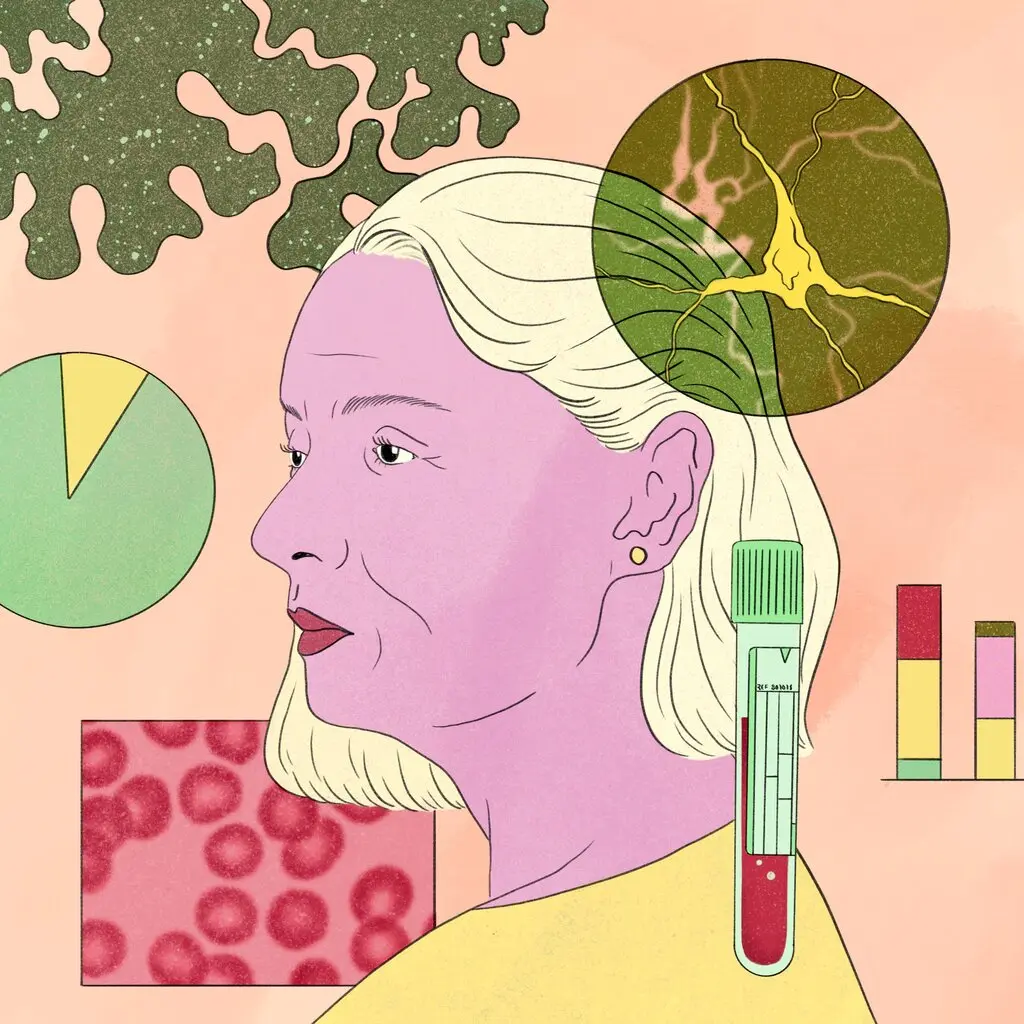
CNN Health explores how p-tau217 blood tests may help assess Alzheimer’s risk. By Sandee LaMotte
Cognitively healthy older adults with high levels of a biomarker called p-tau217 in their blood had an estimated 38% greater chance of developing early signs of dementia over five years, a new study found. Over 10 years, the risk was 78% higher, although the data was not as robust.
“What this tells me is that we really can use p-tau217 blood tests in future to be able to understand somebody’s individual risk of cognitive impairment,” said lead study author Rachel Buckley, an associate professor of neurology at Harvard Medical School.
Traditionally, diagnosing Alzheimer’s required expensive and invasive procedures like PET scans or spinal taps. However, blood tests that measure levels of phosphorylated tau 217, or p-tau217, “strongly predict” the buildup of sticky beta-amyloid plaques in the brain, Buckley said.
The amyloid plaques, which trigger inflammation and damage communication between neurons, can collect in the brain decades before memory loss or cognitive decline — even when people are in their 30s and 40s.
As beta-amyloid levels rise in the brain, tangles of proteins called tau begin gathering inside brain cells, causing neurons to collapse and die. In some diseases such as frontal lobe dementia, which damages executive function instead of memory, tangles can accumulate without the presence of amyloid.
Not everyone with high levels of amyloid will progress to dementia, just as having tau in the brain does not dictate cognitive impairment later in life, Buckley said.
“However, if an early stage of tau is combined with very elevated levels of amyloid, amyloid appears to be the match that lights the fire for the spread of disease across the brain,” she said. “What we think the p-tau217 test can show us is the moment when amyloid is starting to cause this sort of wildfire.”
Such tests are not recommended for cognitively healthy people, but specialists can use them in people with signs of mild cognitive impairment or more advanced dementia.
“Hopefully, p-tau217 tests can one day function like tests that measure your risk of developing diabetes or having a heart attack — but this test would be for your risk for Alzheimer’s disease and dementia,” said Buckley, who also investigates memory disorders at the Mass General Brigham Neuroscience Institute in Boston.
Insights from Alzheimer’s blood tests are invaluable, but results should not be the sole method of identifying disease risk, said Alzheimer’s prevention researcher Dr. Richard Isaacson, director of research at the Institute for Neurodegenerative Diseases in Florida. He was not involved in the study.
“Never would I order a p-tau217 test in isolation. Why? For one, it tells you only one small part of what is most often a complicated biological picture,” said Isaacson, who runs multiple blood and cognitive tests on his patients to double-check p-tau217 results.
“Also, ordering a single test increases the chance of a less meaningful result, like a false positive,” he said. “If someone has a cold, if someone has kidney dysfunction, it can skew results.”
Instead of just using p-tau217 and amyloid blood tests for diagnosis, Isaacson runs them to look for clues on how people are responding to treatment and lifestyle changes, he said.
“In our lab, we are exploring using these tests as a real-time metric, like an engine light,” Isaacson said. “If you have one or two copies of APOE4 and APOE4 protein levels are high, you can put the right fuel in the car — nutrition, exercise, stress management and the rest — and do preventive maintenance to lower your proteins.”
Personalized lifestyle interventions such as an improved diet, exercise, sleep, socialization and more — combined with the management of insulin, cholesterol and other risk factors — have reduced amyloid and tau levels in patients dedicated to improving their health.
“Research is now showing up to 45% of dementia cases can be prevented with lifestyle interventions such as exercise, diet, social engagement, cognitive training, and management, vascular and metabolic risk factors,” said Laura Nisenbaum, interim chief science officer at the Alzheimer’s Drug Discovery Foundation, which funds Alzheimer’s research.
“The blood test, in and of itself, is not the diagnosis,” Nisenbaum said. “Blood tests are used in combination with cognitive testing, for example, and ruling out other causes of the cognitive impairment.”